Universities at the Heart of Green Jobs
Climate change is reshaping economies, industries, and the skills people need to thrive.
The transition to a low-carbon future isn’t just about new technologies — rather, it’s about creating new jobs, fostering new ways of thinking, and building a workforce ready to lead in sustainable development. Moreover, energy plays a critical role in our society, since access to sustainable, reliable, and affordable energy is critical for powering economies, delivering vital services, and ultimately spurring job creation for growing populations.
Higher education institutions are uniquely equipped to drive sustainable transformation.
They are not only centers of learning, but also hubs of innovation, research, and community leadership. In fact, from engineering faculties designing renewable energy solutions to business schools embedding sustainability into corporate strategy, universities are shaping the talent pipeline for the green jobs of tomorrow.
The opportunity is enormous.
0 million
0 %
0 million
Ultimately, whether it’s integrating sustainability literacy into degree programs, building cross‑disciplinary research hubs, or partnering with employers in the clean energy sector, the path forward is clear. Indeed, education is not only a powerful driver of sustainable solutions, but also a critical shield against environmental vulnerability.
How can Universities Support Green Jobs
To begin with, Higher Education Institutions are well‑positioned to prepare the workforce for the rapidly growing green economy. According to the World Economic Forum’s Future of Jobs Report 2023, the green transition — fueled by investments in renewable energy, climate adaptation, and the adoption of ESG standards — is expected to create millions of new jobs globally. Consequently, these trends clearly underscore the critical role of reskilling and upskilling programs, which institutions are uniquely equipped to lead in order to meet the demands of a net‑zero economy.

Integrating Sustainability
Embedding environmental literacy in engineering, business, health sciences, and social sciences.

Industry Partnerships
Codesigning programs aligned with emerging green skills needs like renewable energy, sustainable agriculture, or circular economies.

Applied Research Hubs
With a focus on climate solutions, renewable technologies, and sustainable urban planning.

Offering Micro Credentials
Short courses for upskilling and/or reskilling professionals in green sector jobs.

Facilitating Work-integrated Learning
In collaboration with companies in clean energy, sustainable manufacturing, and environmental consulting.
How are Institutions Introducing a Green Curriculum
Universities worldwide are increasingly embedding sustainability education into curricula, ensuring that graduates gain the skills they need to thrive in a low-carbon economy. For instance, initiatives such as:
- Climate Change Communication Research Hub, AU
- KNUST Engineering Education Project, GH
- Circular Economy Powered Renewable Energy Centre, NG
- Environmental Learning Research Centre, SA
- Global Change Institute, SA
- Sustainable Development Goals Curriculum Mapping, UK
Moreover, HolonIQ’s Green Skills Map highlights how institutions are aligning their programs are strategically aligned with the capabilities required for the global green transition.

Sustainability Modules

Capstone projects

Blended learning approaches

Crossfaculty collaboration

Sustainable Development Goals
Shaping a Sustainable Future
A critical first step toward building a future-ready workforce is evaluating and strengthening employability practices within higher education institutions. By doing so, and by understanding how well current programs prepare graduates for green careers, universities can then identify gaps and opportunities to embed sustainability skills effectively.
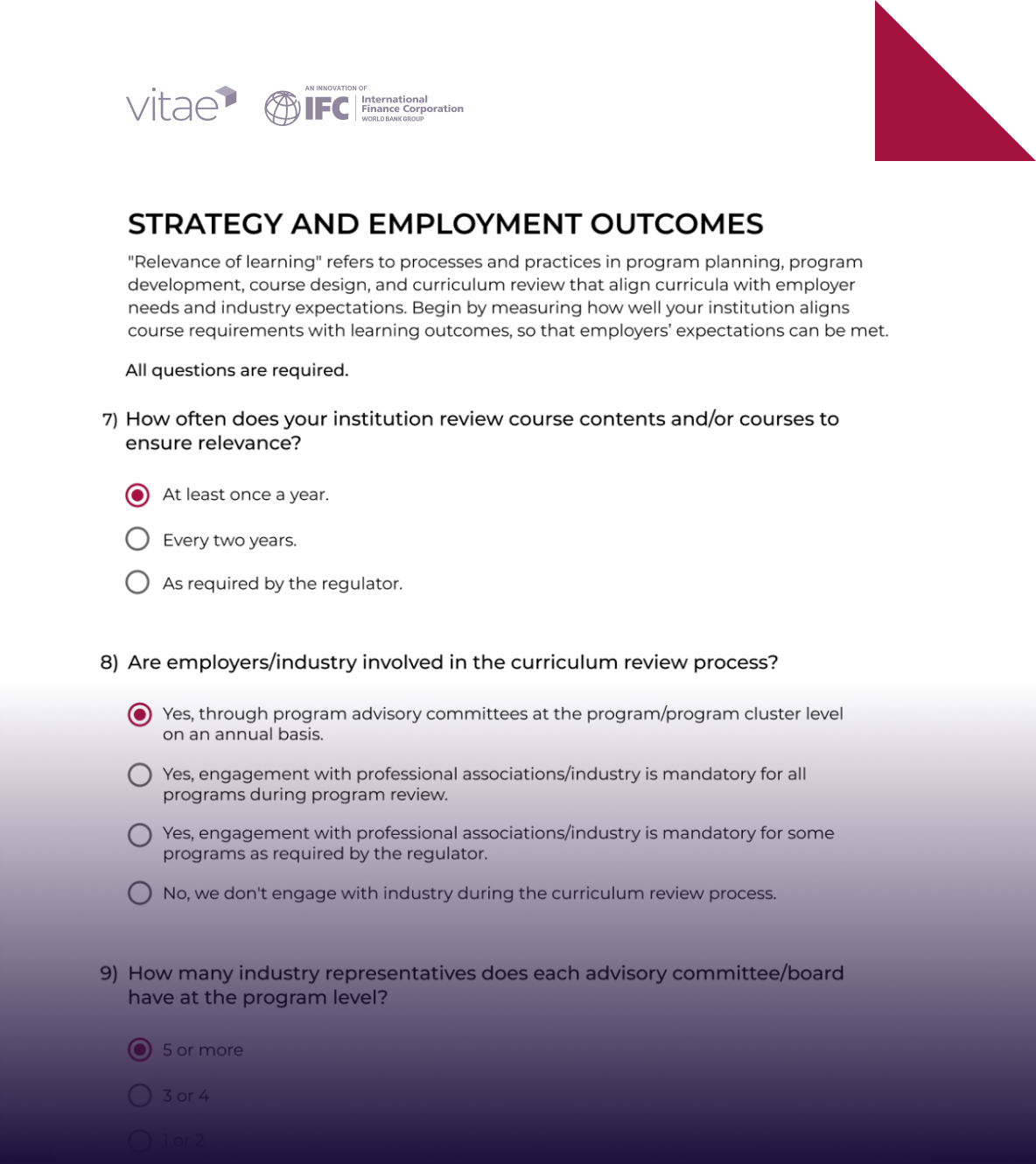
To support this process, our free employability benchmarking tool provides actionable insights into curriculum alignment, industry engagement, and graduate outcomes – thereby helping institutions position themselves as leaders in the green economy. So, don’t wait—start your benchmarking today and take the first step toward equipping students with the skills needed for a sustainable future.