
Driving Graduate Employability in Senegal
Each year, 11 million young people in Africa join the workforce, but a vast number of these graduates lack the relevant skills required by employers. For many of these youth, the journey from the classroom to career remains a major hurdle, with at least a quarter of students worried about their skill gaps. Graduate employability in Senegal is improving through collaboration to close skills gaps, boost digital readiness, and expand training.
To bridge these gaps, International Finance Corporation’s (IFC) Vitae initiative and the World Bank partnered with Senegal’s Ministry of Higher Education, Research and Innovation to support 17 higher education institutions in enhancing graduate employability.
A Growing Skills Gap in Sub-Saharan Africa
By 2030, up to 230 million jobs in Sub-Saharan Africa will require digital skills. However, the percentage of people with basic digital skills remains low and 27 percent of graduates in the region are not work-ready, according to a Vitae graduate survey. At the same time, gaps in tertiary education and labor market realities leave many graduates with no clear path to decent employment.
The Government of Senegal has committed to addressing this mismatch through its National Employment Policy by making youth employment and decent work a major priority in its development plans. But the growing disconnect between learning programs and labor-market priorities continues to limit graduates’ job prospects.
Similarly, people in rural areas face unequal access to learning opportunities, as most tertiary education institutions are concentrated in urban areas with no clear roadmap for expanding vocational programs. As a result, the vast majority of youth end up in informal employment, which limits their potential and contribution to national development.

Laying the Foundation for Skilling and Jobs
In 2023, the World Bank introduced the ESPOIR-JEUNES initiative as part of efforts to help Senegal’s higher education institutions produce market-ready graduates, including by expanding access to technical and vocational training. The initiative aims to multiply the economic contribution of graduates to Senegal’s economy.
Building on this effort, in February 2025, IFC brought its extensive education advisory experience—spanning more than 200 institutions through Vitae and Digital for Tertiary Education Program (D4TEP)—and joined efforts with the World Bank’s regional team to support graduate employability and improved skills in Senegalese higher education.
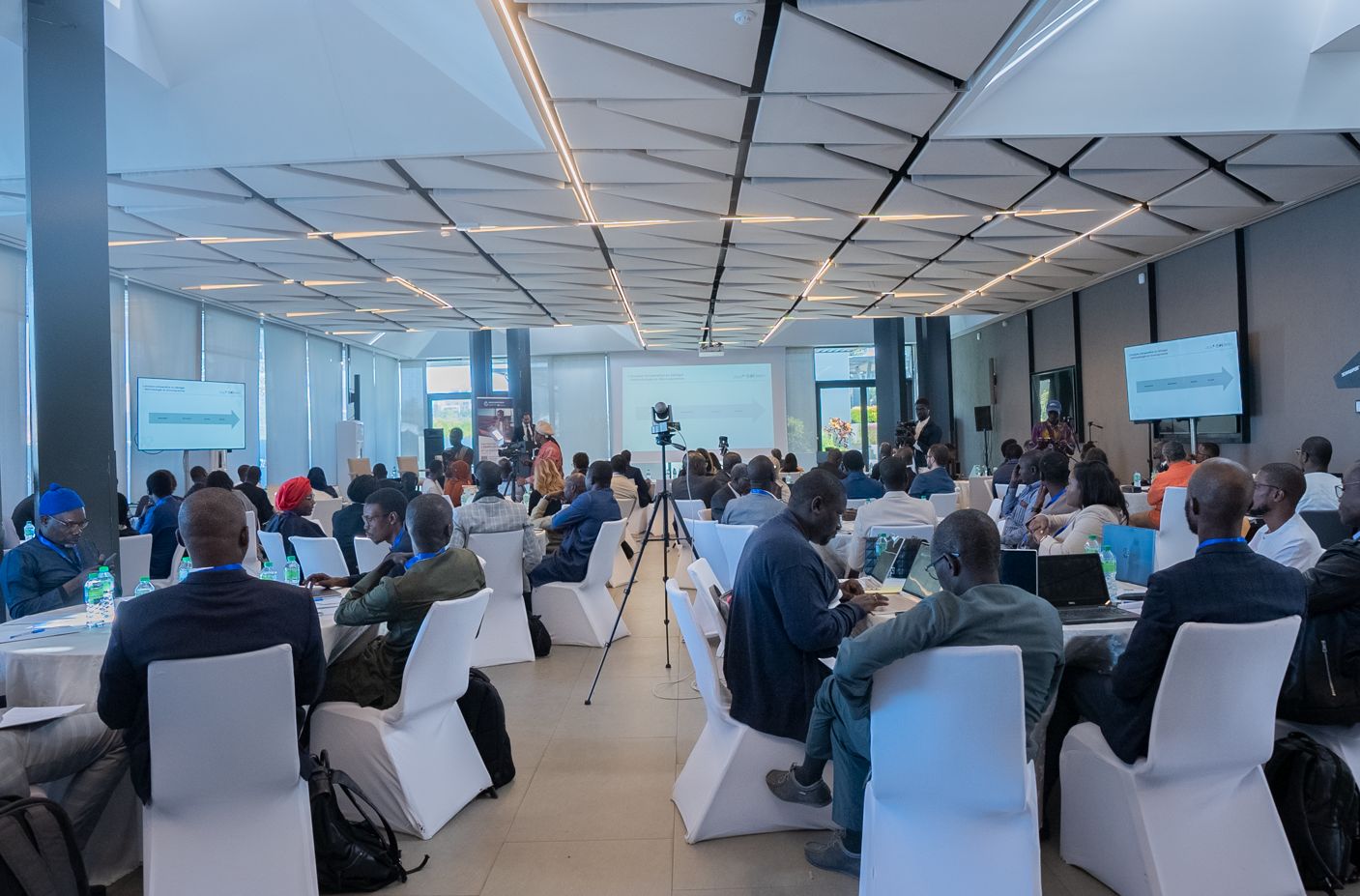
Together, the teams led a National Benchmarking Engagement, to evaluate the baseline market relevance and digital readiness of Senegal’s tertiary education system. Working closely with the Ministry of Higher Education, Research, and Innovation, IFC provided technical leadership on the assessment while the World Bank facilitated engagement with key national stakeholders. The process culminated in a national roundtable with 84 higher education leaders, where participants discussed best practices in employability and digital skills, and explored ways to strengthen graduate outcomes and institutional readiness for a digital economy.
Drawing on these findings, IFC and the World Bank are now providing technical assistance to participating institutions. This includes working with institutions to establish industry advisory committees to align curricula with labor-market needs and to provide students with relevant skills by launching a tracer study to collect data on employment outcomes of graduates.
Innovation in Career Services
To help graduates succeed in the competitive job market, IFC and the World Bank launched a career resources page, targeting French-speaking students. The careers page offers a suite of personalized learning resources, including videos on career preparedness and exclusive access to career guidance and a matching platform.
The team is also developing an AI-powered career guidance chatbot available to users 24/7 both on WhatsApp and the web, helping young graduates to better navigate the job market.
Building the Future Workforce
Jobs are central to economic productivity, social stability, and the future of communities. Boosting employability is an important step in helping economies unlock growth and long-term prosperity.
Amidst the shifts in technology and their impact on how students learn and the skills employers need, better collaboration is needed to translate learning programs into viable competencies that help economies thrive.
IFC and the World Bank are working with Senegal’s higher education institutions to address this urgent need – equipping young people for the future workforce.
A version of this story was originally published in the Education for Development blog.
Get custom insights with our free employability becnhmarking at
https://www.vitaeready.org/benchmarking/
